
GVM vs GCM: Vehicle and Combination Mass Explained

Updated: Oct 13
GVM vs GCM: Gross Vehicle Mass (GVM) limits the loaded mass of the tow vehicle. Gross Combination Mass (GCM) limits the combined actual mass of the vehicle and the trailer or trailers it is towing. They are separate limits. A GVM upgrade does not automatically increase GCM, braked towing capacity or the trailer’s allowable mass.

GVM vs GCM: the key difference
GVM is the maximum permitted mass of the loaded motor vehicle, including passengers, fuel, accessories, cargo and any towball download imposed on the vehicle. The vehicle must also remain within its axle ratings.
GCM is the maximum permitted total mass of the loaded motor vehicle and its trailer or trailers. When weighing a coupled combination, add the tow vehicle’s actual coupled mass (which includes towball download) and the trailer axle-group mass. Do not add the towball download a second time.
Why GVM does not tell you how much you can tow
The permitted trailer mass is also controlled by the vehicle manufacturer’s braked towing capacity, the towbar and coupling ratings, the trailer ATM and GTM, axle ratings, and the applicable registration and operating rules. The lowest applicable limit governs. Subtracting GVM from GCM is not, by itself, a lawful braked towing capacity rating.
Worked example: a 4WD towing a caravan
Assume a hypothetical 4WD has a GVM of 3,200 kg and GCM of 6,000 kg. At the weighbridge, the coupled tow vehicle weighs 3,000 kg, including a 250 kg towball download. The caravan axle group weighs 2,500 kg. The combined actual mass is 5,500 kg, not 5,750 kg: the ball download is already included in the tow vehicle mass.
This combination is within the two assumed GVM and GCM figures, but that alone does not establish compliance. You must also check front and rear axle loads, the vehicle’s braked towing rating, towbar and coupling limits, and the caravan’s ATM and GTM. All example figures are illustrative, not a certification or recommendation for a particular vehicle.
Can GVM or GCM be upgraded?
A GVM increase and a GCM increase require separate vehicle-specific engineering evidence and the applicable approval pathway. Upgraded springs or a heavier towbar do not, by themselves, increase either legal rating. Requirements differ for light and heavy vehicles, before and after first registration, and between jurisdictions. An engineering assessment is not the same as registration-authority acceptance.
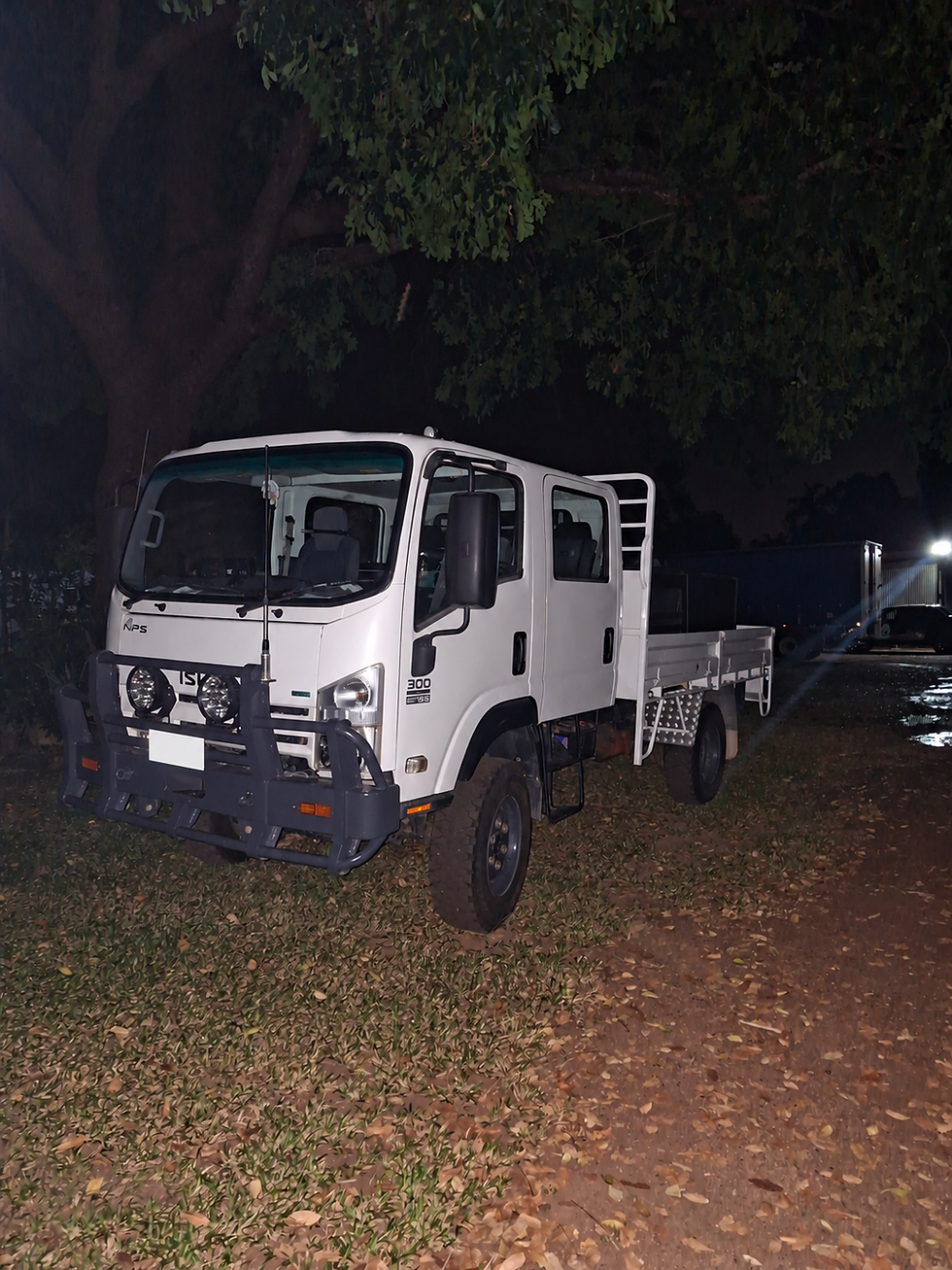
Real engineering project: Isuzu NPS 300
KME Vehicle Engineering’s published Isuzu NPS 300 project describes vehicle-specific GVM and GCM engineering work. The project illustrates why both ratings need to be considered separately when assessing a heavier commercial towing configuration. The published project records its own vehicle, proposed ratings and engineering scope; it is not evidence that the same ratings are available for another Isuzu, 4WD or registration jurisdiction. Owners should have the proposed combination and the applicable approval pathway assessed before purchasing components or relying on an increased towing allowance.
How to check your towing combination
Record the vehicle’s current approved GVM, GCM, axle ratings and braked towing capacity; the towbar and coupling ratings; and the trailer ATM and GTM. Weigh the vehicle and trailer in a representative travelling configuration. Confirm the registration jurisdiction and seek engineering advice before assuming a higher rating can be approved.
Request a GVM or GCM assessment
KME Vehicle Engineering can assess the proposed vehicle and combination, identify the limiting ratings, and advise what engineering evidence and jurisdictional process may be required. Provide the vehicle make, model, year, existing ratings, proposed trailer and registration state or territory.
Comments