
GCM Upgrade Australia: Rules, Towing Limits and Approval Pathways

Updated: Oct 13
A GCM upgrade in Australia may be possible for some vehicles, but approval depends on the vehicle, the proposed rating, engineering evidence and the state or territory where it is registered. Increasing Gross Combination Mass (GCM) does not automatically increase braked towing capacity.
If your loaded 4WD and caravan or commercial vehicle combination is approaching its limits, the first question is which rating is actually restricting the intended operation. KME Vehicle Engineering can assess feasibility and the applicable approval pathway before you commit to parts or installation work.
What is GCM and why does it matter?
Gross Combination Mass (GCM) is the maximum permitted combined mass of the loaded motor vehicle and the trailer or trailers it tows. Accessories, passengers, equipment, fuel and towball download all affect the actual loads. A combination can be within its towing-capacity rating yet still exceed GCM, GVM or an axle limit.

GCM Upgrade Australia: GVM, GCM and towing capacity explained
GVM is the maximum permitted loaded mass of the motor vehicle. GCM is the maximum permitted combined mass. Braked towing capacity (BTC) limits the trailer mass that the tow vehicle is permitted to tow. Trailer ATM and GTM, vehicle and trailer axle ratings, towbar and coupling limits, wheels and tyres must also be checked.
A GVM upgrade does not automatically increase GCM or BTC. A GCM re-rating does not automatically increase BTC. Every applicable limit must be satisfied at the same time.
How do you check your GCM margin?
Use measured vehicle and trailer axle-group masses in a representative loaded and coupled condition, rather than brochure tare weights. For example, with an approved GCM of 6,500 kg, loaded tow-vehicle axle masses of 3,200 kg and coupled trailer axle masses of 3,100 kg, the combined mass is 6,300 kg and the GCM margin is 200 kg. The combination could still breach a different rating.
Avoid double-counting towball download: if the measured vehicle axle masses include the coupled towball load, do not also add the trailer’s full uncoupled ATM. Confirm vehicle GVM, axle loads, trailer ratings and coupling limits separately.
Can a GCM upgrade increase towing capacity?
Not automatically. A higher GCM may permit a higher combined mass in an approved configuration, but it does not by itself authorise a heavier trailer. BTC, towbar, coupling and trailer ratings remain separate constraints. In Western Australia, the VTB-181A GCM re-rating pathway retains the original equipment manufacturer’s BTC; it is not a BTC increase pathway.
Depending on the vehicle and loading problem, reducing mass, redistributing loads within existing limits, addressing trailer ratings where lawfully possible, or selecting a vehicle with suitable factory ratings may be more practical than pursuing an upgrade.
Can a GCM upgrade be approved in Australia?
Potentially, where the specific vehicle and modification satisfy the engineering requirements and a lawful approval pathway exists. Assessment may consider chassis and towing load paths, axle and suspension capacity, braking performance, handling and stability, wheels and tyres, drivetrain and cooling capacity, component evidence and any testing required by the approval authority.
Technical feasibility is not the same as engineering certification, registration-authority acceptance or an updated registration record. The applicable steps and evidence depend on the jurisdiction and the vehicle.
Pre-registration and in-service GCM approval pathways
Before first registration
An approved Second Stage of Manufacture (SSM) process may change specified vehicle ratings under the Commonwealth Road Vehicle Standards framework. The completed vehicle must be covered by the appropriate approval and entered on the Register of Approved Vehicles. A pre-registration GVM approval is not a blanket GCM or BTC increase.
After registration
The relevant state or territory registration authority controls the administrative approval process for an in-service vehicle. VSB 14 is a technical reference for light-vehicle modifications and VSB 6 for heavy-vehicle modifications, but neither creates one uniform post-registration GCM approval process across Australia.
Why your registration jurisdiction matters
Queensland identifies LS16 for specified light-vehicle GCM re-rating work. Western Australia uses VTB-181A for eligible GCM re-rating while retaining the manufacturer’s BTC. Other jurisdictions have their own requirements and may restrict particular changes. Western Australia and the Northern Territory administer heavy-vehicle modifications through their own systems rather than the Heavy Vehicle National Law framework.
If the vehicle may be transferred interstate, confirm acceptance with the receiving registration authority before committing to the modification. An approval in one jurisdiction is not automatically accepted for registration in another.
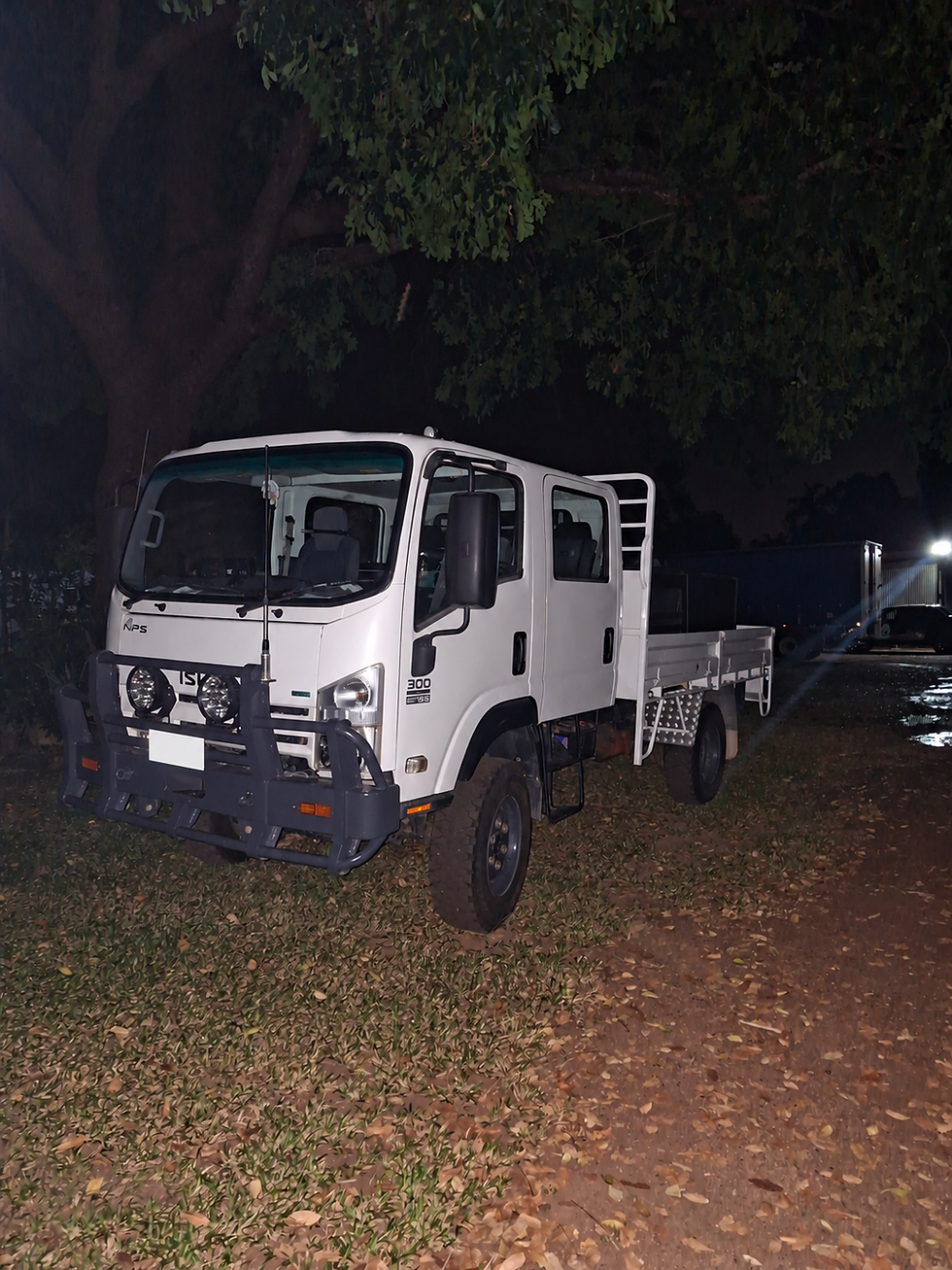
Real KME Vehicle Engineering project: Isuzu NPS 300 GVM and GCM upgrade
KME Vehicle Engineering completed an engineering assessment and Queensland certification for a 2012 Isuzu NPS 300 4x4 dual-cab. The published project documents a change from 6,000 kg to 7,500 kg GVM and from 9,500 kg to 11,000 kg GCM following vehicle-specific design verification and brake testing. These figures relate to that particular project, not a general approval available to every Isuzu NPS 300.
What happens during a GCM engineering assessment?
First, identify the vehicle, existing ratings, trailer details, registration jurisdiction and intended operating loads. Next, measure the loaded combination and identify the limiting rating. The engineer can then assess feasibility, the proposed design, evidence requirements and the relevant approval pathway before any installation or testing.
Where the project proceeds, documentation may include calculations, component verification, inspection records, test evidence and the required certification or authority approvals. Registration and insurance notifications remain separate owner obligations where applicable.
GCM upgrade Australia: frequently asked questions
Who can assess a GCM upgrade in Australia?
A suitably qualified vehicle engineer can assess feasibility, but formal certification and approval must follow the relevant jurisdiction’s requirements. Not every mechanic or engineer is authorised to certify every rating change.
Does a GVM upgrade automatically increase GCM?
No. GVM and GCM are separate ratings. An approved GVM increase does not automatically change GCM or braked towing capacity.
Does a GCM re-rating increase braked towing capacity?
No, not automatically. A higher GCM does not by itself permit a heavier trailer. Braked towing capacity, trailer and towbar ratings, coupling and axle limits remain applicable.
Can an already registered vehicle receive a GCM upgrade?
Some vehicles may be eligible under a jurisdiction-specific in-service approval pathway. Confirm the vehicle, design and registering jurisdiction before modifying it.
Does a GCM upgrade guarantee insurance cover?
No. Disclose relevant modifications and approval documents to your insurer and confirm cover. Certification does not guarantee a warranty or insurance outcome.
How much does a GCM upgrade cost?
Costs vary with the vehicle, design, engineering evidence, physical modifications, testing and approvals. A preliminary feasibility review can establish whether the proposed outcome is realistic.
Insurance and warranty
Owners should disclose relevant modifications and approval documents to their insurer and confirm coverage. Warranty implications depend on the manufacturer, components and circumstances. Engineering certification does not guarantee insurance cover, warranty outcomes or registration acceptance in every jurisdiction.
Official technical references
Requirements and guidance may change. Check the latest official publications and the registration authority for the vehicle’s jurisdiction.
Request a GCM engineering assessment
Tell KME Vehicle Engineering your vehicle make, model, year and variant, current ratings, registration state or territory, existing modifications, trailer details and intended operating loads. We can review the information and advise on the appropriate next step.


Comments