
Vehicle Structural Assessment: The Engineering Checklist for Compliance

Updated: Sep 9
Could a single overlooked weld or an uncertified bolt be the only thing standing between your vehicle and a legal registration? For many vehicle owners across Australia, the excitement of completing a significant modification, like a 300 series LandCruiser suspension upgrade Darwin, is often tempered by the looming shadow of a compliance inspection. It's a common frustration to invest significant time and money into a build, only to feel overwhelmed by the technical jargon of VSB6 and ADR requirements. You deserve the confidence that your vehicle isn't just capable off-road, but also fully compliant with Australian safety standards.
We understand the anxiety that comes with ensuring a repaired chassis or a heavy-duty modification meets the strict gaze of a structural assessment. This guide from KME Vehicle Engineering provides a clear, professional breakdown of the engineering checklist used to verify your vehicle's integrity. You'll discover the critical steps specialised engineers take to translate complex mechanical work into a legal certification, giving you total peace of mind. We're outlining the essential assessment criteria, from structural load-bearing points to the documentation required for a smooth path to registration approval.
Key Takeaways
Understand the technical distinction between a standard roadworthy inspection and a professional structural assessment focused on chassis and metallurgical integrity.
Identify why a certified engineering sign-off is essential for complex modifications like a 300 series LandCruiser suspension upgrade Darwin to ensure road-legal status.
Learn about the mandatory requirements for Engineered Repair Plans following major frame damage or during GVM and ATM upgrade processes.
Discover how precision alignment checks and non-destructive weld testing provide the verification needed to satisfy insurers and registration authorities.
Gain a clear understanding of how professional assessments protect your legal standing and ensure long-term safety for heavy towing and off-road applications.
Table of Contents
What is a Vehicle Structural Assessment?
A vehicle structural assessment is a detailed technical evaluation of a vehicle's frame, chassis, and core load-bearing components. While many owners are familiar with a standard roadworthy check, a structural assessment goes much deeper. It prioritises metallurgical integrity and structural stability over simple wear and tear items. This process ensures that any modifications, such as a 300 series LandCruiser suspension upgrade Darwin, or major repairs haven't compromised the vehicle's original safety rating. These assessments are a cornerstone of automotive engineering services, providing the legal framework for non-standard modifications.
Engineering vs. Mechanical Inspections
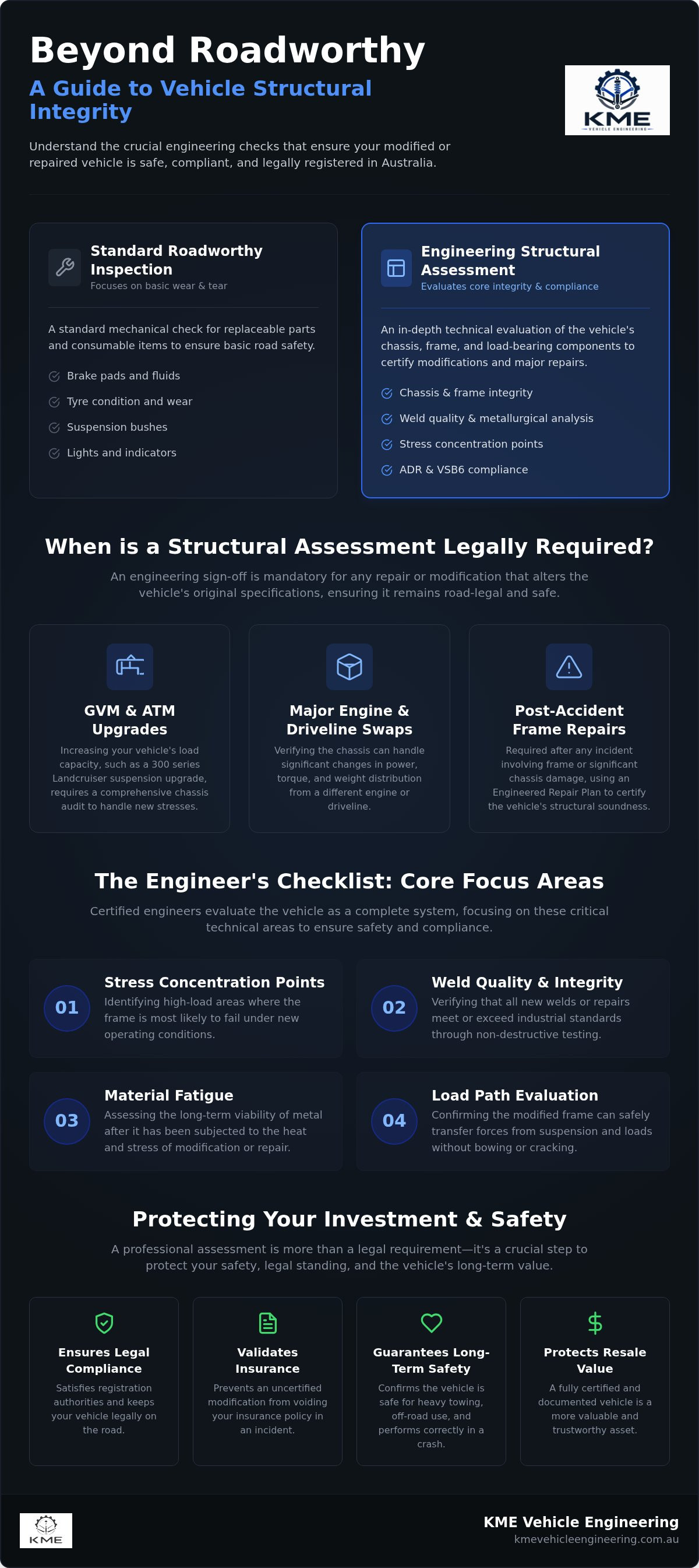
A standard mechanical inspection typically focuses on the condition of replaceable parts, like brake pads or bushes. In contrast, an engineering inspection looks at the vehicle as a complete system. Certified engineers interpret Australian Design Rules (ADRs) to ensure that modifications don't negatively impact the vehicle's behaviour under stress. When you're performing a 300 series LandCruiser suspension upgrade Darwin, the increased GVM or changed geometry places unique stresses on the chassis. An engineer evaluates these load paths to confirm the frame can withstand the new operating conditions without cracking or bowing. We focus on specific technical areas, including:
Stress concentration points: Identifying where the frame is most likely to fail under load.
Weld quality: Verifying that any repairs or additions meet industrial standards.
Material fatigue: Assessing the long-term viability of the metal after it's been subjected to heat or stress.
The Importance of Structural Integrity
Structural weakness isn't always visible to the naked eye, but it drastically affects how a vehicle handles and performs in a crash. If the chassis is compromised, the vehicle's crumple zones may not activate as designed. This is why global benchmarks, such as the Federal Motor Vehicle Safety Standards (FMVSS), emphasise the durability and construction of the vehicle's frame. These standards provide a foundational understanding of how vehicles must behave during impact to protect occupants.
Driving a structurally compromised vehicle on public roads can create serious safety, regulatory and liability issues. If a modification has not followed the applicable approval pathway, it may also affect insurance depending on the policy and the circumstances of an incident. A professional assessment provides documented evidence of the vehicle's structural condition and supports the relevant approval or registration process.
When is a Structural Assessment Legally Required?
Australian law is clear regarding vehicle modifications. A structural assessment isn't an optional extra; it's a mandatory requirement for any repair or modification that alters the vehicle's original engineering specifications. This includes accidents involving frame damage, but it also applies to high-performance builds and workhorse conversions. If you're converting a vehicle for commercial use or performing a significant engine swap, the law requires a certified engineer to verify the chassis can handle the new configuration. This process ensures the vehicle remains road-legal and safe for all occupants.
Many owners in the Northern Territory overlook the legal necessity of an assessment during a 300 series LandCruiser suspension upgrade Darwin. While the kit itself might be high quality, increasing the load capacity changes the vehicle's fundamental physics. If the upgrade pushes the vehicle beyond its original limits, it's no longer just a mechanical change. It becomes a structural one. You can learn more about the regulatory landscape and why these checks are essential in our guide on what is a GVM upgrade.
GVM and ATM Upgrades
Increasing your load capacity requires a comprehensive structural audit of the chassis. It's about more than just fitting heavier springs. We evaluate the vehicle's ability to handle increased stress and torque at every critical join. Professional engineers utilise SAE International engineering standards to ensure that every suspension mount and mounting point is fit for purpose. This prevents catastrophic failures when the vehicle is fully loaded on corrugated tracks. If you're planning a build and want to stay within the law, reviewing your modification plans with an engineer early can save thousands in rework.
Chassis and Frame Repairs
VSB6 governs how welding is performed on vehicle frames. If you've had a chassis straightened or sectioned after an accident, a standard mechanic's word isn't enough to satisfy registration authorities. A structural repair plan must often be drafted before work even begins. This document outlines the specific metallurgical requirements and welding techniques needed to restore the frame to its original strength. Once the work is complete, the engineer performs a final assessment to certify that the repair meets all national safety standards.
The Structural Integrity Checklist: Core Engineering Focus Areas
Professional engineering involves moving beyond visual checks to quantitative verification. When we assess a 300 series LandCruiser suspension upgrade Darwin, we follow a rigorous checklist to ensure the vehicle remains a cohesive, safe unit. This isn't just about ensuring the parts fit. It's about verifying that the chassis can handle the dynamic loads of the Top End's harshest terrain. Our process follows a logical sequence to identify potential failure points before they become safety hazards.
The core focus areas of a professional structural assessment include:
Chassis alignment: We use precision measurement tools to check for twists, bows, or sags in the frame. Even a few millimetres of misalignment can lead to accelerated tyre wear and unpredictable handling under heavy braking.
Weld integrity: For any modified or repaired sections, we employ Non-destructive testing (NDT) methods. This often involves dye penetrant or magnetic particle testing to ensure critical joins are free from surface cracks or internal voids.
Corrosion and fatigue: We look for stress risers and hidden rust, particularly in boxed sections where moisture and Darwin's coastal salt can accumulate. Identifying these early prevents material fatigue from causing a structural failure mid-trip; if you are also managing vessels in coastal environments, you can find out more about professional marine grooming to combat salt damage.
Fastener compliance: Engineering standards dictate that high-tensile bolts, typically Grade 8.8 or 10.9, must be used in structural mounts. We verify that all fasteners meet these specifications and are correctly torqued.
Modification sign-off: Every change must be cross-referenced against the modified vehicle compliance inspection standards to ensure the vehicle is eligible for legal certification.
Chassis and Suspension Mounts
The 300 series platform is robust, but shock towers and spring hangers are subjected to immense stress during off-road travel. We inspect these areas for hairline cracks that often start at the edge of factory welds. We also verify the integrity of aftermarket bracketry used for 4WD accessories. It's vital to ensure that load distribution remains consistent with the vehicle's original design, preventing localised stress from warping the frame rails.
Material and Component Standards
When repairs or reinforcements are necessary, the replacement steel must match or exceed OEM specifications. We check for proper heat treatment in critical components to ensure the metal retains its intended strength. "Backyard" modifications often involve excessive heat from welding that can compromise the metal temper, making it brittle. Our assessment confirms that the structural integrity of the metal has been preserved throughout the modification process.
Designing and Implementing Certified Structural Repair Plans
A standard vehicle repair focuses on restoring functionality and appearance. An Engineered Repair Plan (ERP) is a more rigorous technical document used to define how structural repairs or modifications are to be completed and evidenced. Depending on the vehicle, repair and jurisdiction, engineering documentation may be required by a registration authority, repairer, insurer or other stakeholder. Major structural work completed without the required engineering and approval process can create registration, safety and insurance issues.
When implementing a 300 series LandCruiser suspension upgrade Darwin, the design phase is critical. If the modification involves structural alterations to the chassis rails or cross-members, an engineer must draft a plan that specifies exactly how the work should be performed. This collaborative process involves the engineer working closely with a specialised panel shop or fabricator to guide the restoration. We document every stage of the process, from the initial alignment to the final weld, creating a comprehensive evidence base for the final compliance report.
The Role of VSB6 and VSB14
The National Code of Practice is divided into VSB6 for heavy vehicles and VSB14 for light vehicles. These standards dictate the acceptable methods for sectioning, welding, and reinforcing vehicle frames on Australian roads. Adhering to these codes is the only way to ensure your vehicle is not red-flagged by authorities for using non-standard repair techniques. These standards ensure that even the most complex "weird" engineering puzzles are solved within a safe, legal framework. If you're unsure if your planned modifications meet these national requirements, you can consult with our engineering team to verify your repair or modification strategy.
Certification and Final Sign-Off
The final stage of any structural work is the issuance of a modification certificate or the fitment of a modification plate. This plate serves as a permanent record that the vehicle has been assessed and certified by a qualified engineer. The structural assessment we perform acts as the technical evidence required for this legal compliance. It's a methodical process that leaves no room for error. If a vehicle fails the initial assessment, the engineer identifies the specific areas that require rectification. This might involve re-welding a join or realigning a section of the frame until it meets the necessary tolerances. Only once every criterion is satisfied will the final sign-off be granted, allowing the vehicle to return to the road with full legal status.
The Benefits of a Professional Engineering Assessment
A formal structural assessment provides documented evidence about the condition and suitability of the modified or repaired structure. If an accident occurs, an insurer may consider whether modifications were disclosed and whether required approvals were obtained. An uncertified 300 series LandCruiser suspension upgrade Darwin may affect a claim depending on the policy, the circumstances and whether the modification contributed to the loss. Engineering assessment does not guarantee insurance coverage, but it provides evidence that can support the applicable compliance and disclosure process.
Beyond legalities, the primary benefit is safety assurance. You gain the confidence of knowing your vehicle is structurally sound for heavy towing or remote off-road travel. Compliance also streamlines the ownership experience. Roadside inspections by transport authorities or registration transfers during a sale become hassle-free when you possess a valid modification plate. You aren't just buying a certificate; you're accessing the technical mastery required to solve complex engineering puzzles and ensure your vehicle is fit for purpose.
Maximising Vehicle Capability
A professional assessment is the key to unlocking a vehicle's true work capacity. By verifying structural strength, we can often facilitate higher GVM and ATM ratings that would otherwise be legally unavailable. This is particularly relevant when fitting 300 Series LandCruiser suspension kits. For commercial fleet operators, this verification ensures that every vehicle in the fleet is prepared for the rigorous daily operations common in the Northern Territory. Benefits include:
Enhanced Payload: Legally increasing the amount of gear or equipment you can carry.
Towing Confidence: Ensuring the chassis can handle the increased ball weight of heavy trailers.
Durability: Identifying and reinforcing weak points before they lead to structural failure.
Getting Started with KME Vehicle Engineering
Our consultation process is designed to be methodical and transparent. We start with an initial enquiry to understand your specific goals, followed by a technical review of your modification or repair plans. KME Vehicle Engineering thrives on unconventional challenges. Whether it's a non-standard structural issue or a complex 300 series LandCruiser suspension upgrade Darwin, our steady hand guides you toward a verified solution. We take the time to be thorough, ensuring every aspect of your vehicle's compliance is accounted for. Ready to certify your vehicle? Contact KME Vehicle Engineering today to begin your path to legal, road-ready certification.
Structural Damage Repair: The Full Compliance Process
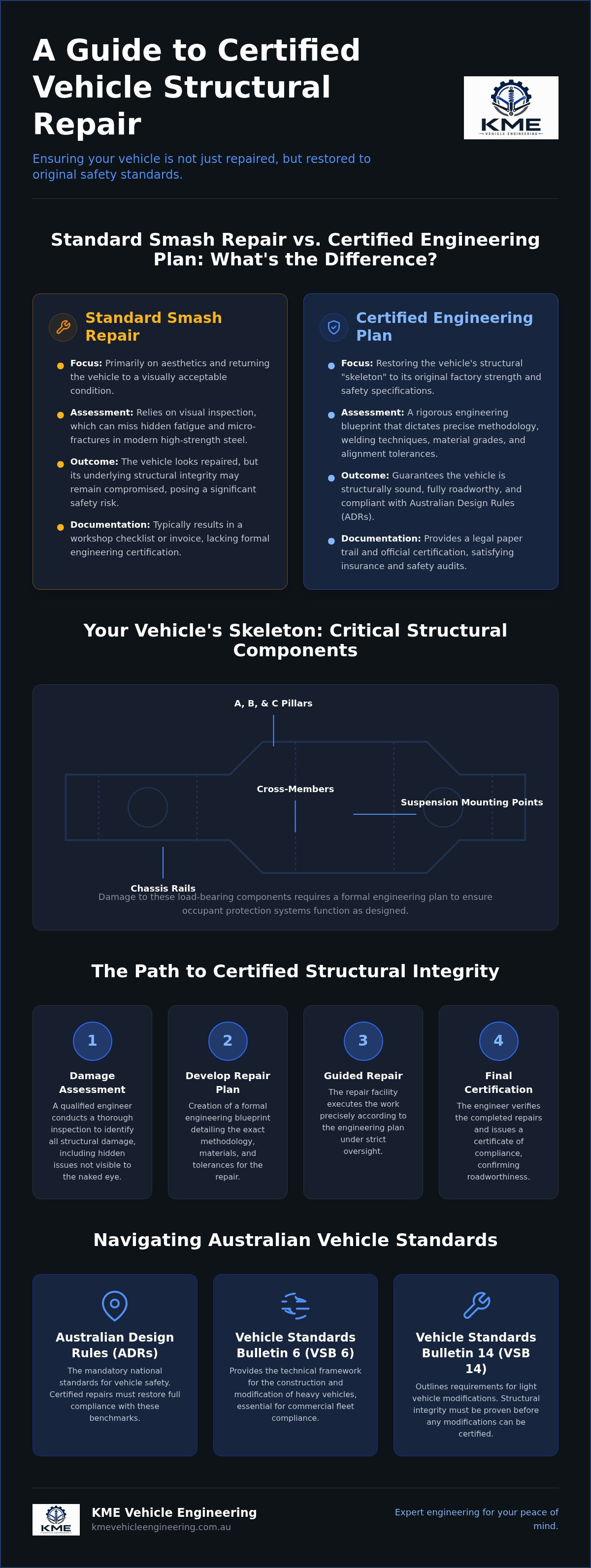
A standard smash repair may restore appearance and basic function, but structural damage can require additional assessment to establish whether the repair is suitable for the intended approval pathway. Where engineering sign-off is required, the objective is to document structural condition, repair scope and compliance evidence rather than assume that a cosmetic repair is sufficient.
This guide explains how a professional engineering plan restores structural integrity while ensuring full compliance with Australian Design Rules (ADRs). You'll learn the specific steps required to verify chassis safety and the path toward securing official certification. We will explore the methodical process of assessing damage and implementing repairs that meet the highest regulatory benchmarks, giving you total peace of mind before you head back out on the road. Whether you're managing a commercial fleet or a personal 4WD, understanding these requirements is the only way to ensure your vehicle remains a safe, legal asset.
What is a Structural Damage Repair Plan and Why is it Essential?
A structural damage repair plan vehicle owners and fleet managers commission is a formal engineering blueprint. It is far more than a simple workshop quote. While a mechanical quote focuses on costs and parts, an engineering plan dictates the specific technical methodology required to restore the vehicle frame and chassis to its original factory strength. It provides a detailed roadmap for repairers, specifying welding techniques, material grades, and alignment tolerances that a typical smash repair quote ignores.
The vehicle’s skeleton consists of load-bearing components like chassis rails, pillars, and cross-members. These areas are designed to handle specific stresses and manage impact energy. When these zones are compromised in a collision, the vehicle's ability to protect its occupants is fundamentally altered. Relying on a workshop's visual assessment is risky. Modern high-strength steels can hide internal fatigue or micro-fractures that only a dedicated engineering assessment can uncover. Without a certified plan, you're essentially guessing about the vehicle's future performance.
A certified repair plan creates a clear technical record of the assessed damage, repair method and required verification. That record can support registration, fleet governance and insurance disclosure, but it does not by itself determine legal liability, roadworthiness approval or insurance coverage.
The Role of Structural Integrity in Vehicle Safety
Modern vehicles use complex energy dissipation systems. Crumple zones are precisely engineered to deform during impact, absorbing kinetic energy before it reaches the cabin. If a repair is too rigid, that energy is transferred directly to the passengers. If it's too weak, the cabin structure may collapse. Occupant protection systems like airbags and seatbelt pretensioners are calibrated to work with these specific deformation rates. Within the framework of ADR compliance, structural integrity refers to the capacity of a vehicle's load-bearing frame to perform its energy-management and occupant-protection functions exactly as originally engineered.
When is a Formal Repair Plan Legally Required?
In most Australian jurisdictions, damage to major structural components requires a formal clearance before the vehicle can be legally re-registered. A formal structural damage repair plan vehicle assessment is often a prerequisite for clearing a vehicle from the Written-off Vehicle Register (WOVR), where a repairable write-off must pass a rigorous inspection. You'll likely need an engineering plan if the collision impacted:
A, B, or C Pillars: The vertical supports that hold the roof and doors.
Chassis Rails: The primary longitudinal members of the vehicle frame.
Suspension Mounting Points: Where structural integrity affects wheel alignment and handling.
For commercial operators, an independent engineering sign-off is vital for fleet safety audits. It ensures compliance with national standards like VSB6 for heavy vehicles. It's about more than just getting the car back on the road; it's about meeting your legal duty of care to your drivers and the public.
Engineering Standards: Navigating VSB6, VSB14, and ADRs
The Australian Design Rules (ADRs) serve as the mandatory national standards for vehicle safety and structural integrity. When a vehicle sustains significant impact, any structural damage repair plan vehicle owners or fleet managers commission must ensure the finished work restores the vehicle's compliance with these rules. While the ADRs set the performance benchmarks, the Vehicle Standards Bulletins (VSBs) provide the technical frameworks that engineers use to draft compliant methodologies. These codes ensure that every weld, fastener, and material choice aligns with the rigorous safety expectations of the National Heavy Vehicle Regulator (NHVR) and state transport authorities.
Engineers don't simply guess at the correct repair method. They rely on these standardised codes to calculate load capacities and stress tolerances. By following these guidelines, a professional engineer can bridge the gap between a workshop's physical repair and the legal certification required to keep the vehicle on the road. If you're managing complex repairs, a thorough vehicle compliance inspection is often the first step in identifying which specific standards apply to your situation.
VSB6 and Heavy Vehicle Structural Repairs
Heavy vehicles operate under immense mechanical stress, particularly in the demanding environments of heavy haulage and mining. VSB6 (National Code of Practice for Heavy Vehicle Modifications) is the primary authority for these assets. Section H specifically governs chassis modifications and repairs, outlining strict requirements for chassis extensions and the restoration of longitudinal members. When developing a chassis repair assessment NT operators can rely on, engineers must specify welding standards that meet or exceed the original manufacturer's specifications. This often involves using specific high-tensile materials and specialised joining techniques that prevent future structural fatigue under heavy loads.
VSB14 and Light Vehicle Compliance
For light vehicles, including passenger cars and 4WDs, VSB14 provides the National Code of Practice for Light Vehicle Construction and Modification (NCOP). This code addresses the critical differences between unibody and body-on-frame constructions. A certified structural damage repair plan vehicle assessment for light vehicles focuses heavily on steering geometry and suspension mounting points. These components must be returned to precise factory tolerances to ensure predictable handling and braking. This technical precision is supported by the National Training Standards for Structural Repair, which technicians use to maintain high-quality workmanship. Where the applicable jurisdiction or repair pathway requires engineering sign-off, the relevant authorised engineer or signatory may need to inspect and document the completed work.
Assessing Chassis Integrity: Fixes vs. Certified Engineering
A visual inspection is no longer sufficient for modern vehicle assessments. Many contemporary vehicles are constructed using Ultra-High-Strength Steel (UHSS) and sophisticated alloys that react differently to impact than traditional mild steel. While a chassis might look straight to the naked eye, the internal molecular structure of the metal may be compromised. A formal structural damage repair plan vehicle assessment moves beyond surface-level checks, using engineering principles to determine if the metal's integrity remains intact or if it has reached its elastic limit.
The traditional method of "pulling" a frame back to square on a hydraulic bench can be problematic with modern materials. Applying heat or excessive force to straighten a rail often leads to work-hardening, a process that makes the steel brittle. This creates a high risk of micro-fractures that are invisible without specialised equipment. If these fractures are left unaddressed, the chassis rail may fail catastrophically in a subsequent, even minor, collision. An engineer validates the repair by specifying non-destructive testing (NDT), such as dye penetrant or magnetic particle inspection, to ensure the structural members are free from internal defects.
Sectionalised Repairs vs. Component Replacement
Deciding whether to repair or replace a structural member is a critical part of the engineering process. In many cases, it's safer to replace an entire rail section at factory-approved join points rather than attempting to straighten a kinked member. When a repair is feasible, an engineer might specify "sleeving" or reinforcing the area to restore its load-bearing capacity. These reinforcements must be carefully designed to ensure they don't interfere with the vehicle's original energy paths. The goal is to maintain the factory-designed crumple zones so the vehicle still protects occupants as intended by the Australian Design Rules.
3D Measuring and Laser Alignment Standards
Precision is the hallmark of a certified repair. When a vehicle travels at 100 km/h, a discrepancy of just a few millimetres in the wheelbase or track can cause significant high-speed instability and accelerated tyre wear. Engineers use 3D measuring systems and laser alignment to compare the post-repair vehicle against original pre-accident factory data. This level of accuracy is essential for ensuring that fleet vehicle modification certification remains valid. Without documented proof that the chassis is perfectly aligned and structurally sound, the vehicle's legal compliance and safety rating are effectively void.
The Step-by-Step Process of Developing a Certified Repair Plan
Developing a comprehensive structural damage repair plan vehicle owners and fleet managers can rely on requires a methodical transition from workshop assessment to engineering verification. This isn't merely about identifying broken components; it's about validating the entire structural network of the asset. The process ensures that every repair action is backed by technical data and aligns with national safety standards, providing a transparent record for insurers and transport authorities.
Phase 1: The Detailed Damage Analysis
An automotive engineer begins by identifying "sympathetic" damage. This refers to structural fatigue or stress fractures that occur far from the primary impact site. For instance, a heavy front-end collision can send kinetic energy through the chassis rails, causing buckling or rivet failure near the rear suspension mounts. Engineers use precision diagnostic tools and 3D measuring systems to map these hidden failures. By consulting original equipment manufacturer (OEM) repair manuals alongside VSB standards, the engineer determines whether a component can be safely restored or requires a full replacement to maintain the vehicle's original energy-management capabilities.
Once the analysis is complete, the engineer drafts the technical methodology. This document acts as the workshop's "bible" for the duration of the project. It specifies the exact material grades required, the specific fasteners to be used, and the approved welding techniques. It removes the guesswork from the repair process, ensuring the technician's labour matches the engineering requirements for structural integrity.
Phase 2: Execution and Engineering Oversight
Execution involves a close collaboration between the panel shop and the automotive engineer. Unlike standard repairs, a certified structural damage repair plan vehicle assessment requires in-progress inspections. The engineer visits the workshop at critical milestones to verify that the specified methodology is being followed correctly. This oversight is particularly vital for complex assets, ensuring all work meets the high benchmarks required for a commercial vehicle fit-out Darwin operators expect for their fleets.
The final stage is the issuance of the compliance report. This document confirms that the vehicle has been returned to its pre-accident structural condition and meets all relevant ADRs. The engineer updates the vehicle's records, providing the owner with the necessary certification to clear any defect notices or Written-off Vehicle Register (WOVR) requirements. If you're currently managing a vehicle with chassis concerns, contact KME Vehicle Engineering to begin the formal assessment process and secure your roadworthy certification.
Structural Integrity and Modifications: Managing GVM and GCM Upgrades
When a vehicle is modified to carry more weight, its structural baseline is fundamentally elevated. If that vehicle is involved in a collision, the existing certification for what is a GVM upgrade is effectively suspended until the chassis is proven to still meet those higher load-bearing requirements. A standard structural damage repair plan vehicle assessment must be expanded in these cases to account for the increased stresses placed on the frame. It's not enough to return the vehicle to factory specs; it must be returned to the specific engineered specs of the modification.
Recertifying load-carrying capacity after a major structural repair is a meticulous process. An engineer needs to verify that the repaired chassis rails and mounting points can still support the upgraded suspension and the intended payload. For 4WDs with tray conversions or heavy-duty suspension, the chassis often undergoes unique stresses that standard passenger cars don't face. Proper reinforcement is essential to maintain the legal Gross Combination Mass (GCM). This ensures the vehicle can still safely and legally tow its rated capacity without risking structural failure or insurance rejection.
Protecting Your Investment in Modifications
A standard smash repair often overlooks the specifics of aftermarket engineering. If a technician uses standard parts or methods on an upgraded vehicle, they might inadvertently void your previous engineering certifications. It is vital to integrate your repair plan with existing modification reports to ensure continuity of compliance. For owners of a 300 Series LandCruiser suspension kit, this means ensuring that every bracket and mount is restored to the specific tolerances required for that high-performance setup. Failing to do so can lead to premature component wear or even total structural failure under load.
The KME Approach to Structural Excellence
KME Vehicle Engineering takes a "Trusted Specialist" approach to every assessment, prioritising safety and legality above all else. We understand that for fleet operators, a single out-of-action vehicle represents a significant liability and a break in the duty of care. Our engineers work to ensure that every asset in your fleet remains compliant, safe, and productive through rigorous verification. We don't just provide a report; we provide a clear pathway back to full operational legality. If your vehicle has sustained damage or you need to verify the integrity of a previous repair, booking a structural assessment is the first step toward total peace of mind and roadworthy certainty.
Securing Your Vehicle's Structural Future
Restoring a vehicle after a collision involves more than just aligning panels; it requires a methodical verification of the underlying chassis. A certified structural damage repair plan vehicle owners invest in ensures that every weld and fastener meets the precise standards of the Australian Design Rules. By navigating the complexities of VSB6 and VSB14, you protect your asset's roadworthiness and your own legal liability. Whether you are managing a commercial fleet or a modified 4WD, independent engineering sign-off is the only way to guarantee that your vehicle remains safe under load.
KME Vehicle Engineering provides the technical mastery needed to solve these complex structural puzzles. We specialise in VSB6 and VSB14 compliance, offering independent engineering certification for commercial fleets and 4WD modifications. Our team ensures your repairs are documented, verified, and fully compliant with national regulations, giving you total peace of mind on the road.
Contact KME Vehicle Engineering for a professional structural repair plan to secure your roadworthy certification today. We are ready to help you navigate the path from collision to compliance with confidence.
Frequently Asked Questions
What is the difference between a repair quote and a structural repair plan?
A repair quote is a financial estimate provided by a smash repairer that focuses on the cost of parts and labour. In contrast, a structural damage repair plan vehicle assessment is a technical engineering document that dictates the specific methodology required to restore the vehicle's frame. It outlines welding standards, material specifications, and alignment tolerances to ensure the asset meets the Australian Design Rules (ADRs).
Can any mechanic write a structural repair plan for my vehicle?
No, a formal structural repair plan must be drafted by a certified automotive engineer or a recognised signatory. While a mechanic is responsible for the physical labour, they don't have the legal authority to certify structural integrity. The engineer provides the independent oversight and technical calculations needed to verify that the vehicle's "skeleton" is safe for Australian roads.
Will a structural repair plan help clear my vehicle from the WOVR?
Yes, a certified plan is often a mandatory requirement for clearing a vehicle from the Written-off Vehicle Register (WOVR). Transport authorities require documented evidence that a repairable write-off has been restored using approved engineering methodologies. This document, combined with a final inspection, proves to the regulator that the vehicle is no longer a safety risk.
How much does a certified structural repair plan typically cost?
The cost of developing a plan varies depending on the complexity of the damage and the vehicle type. Engineering fees are separate from the workshop's repair costs and reflect the time required for assessment, technical drafting, and final certification. Since every chassis failure is unique, you'll need a specific assessment to determine the engineering requirements for your vehicle.
Is my GVM upgrade still legal after a major structural repair?
Your GVM upgrade remains legal only if the structural repair is certified to handle the increased load-carrying capacity. A major collision can compromise the very sections of the chassis that were reinforced for the upgrade. An engineer must verify that the repair restores the vehicle's ability to safely manage its Gross Vehicle Mass without risking structural fatigue or failure.
What happens if a vehicle is repaired without a certified engineering plan?
Repairing significant damage without a plan creates major legal and safety liabilities. You may find that your insurance policy is voided, and the vehicle could be deemed unroadworthy during a compliance check or fleet audit. If the vehicle is involved in a subsequent accident and the structural repair fails, the owner or fleet manager could be held personally liable for injuries.
Do I need a structural repair plan for a minor car park bender?
Generally, minor cosmetic damage like a dented panel or a bruised bumper doesn't require an engineering plan. However, if the impact was sufficient to jar the chassis or affect suspension mounting points, an assessment is a wise precaution. If there's any doubt about whether the damage has reached the vehicle's frame, a professional inspection is the only way to be certain.
How long does the engineering certification process take for a chassis repair?
The timeframe depends on the repair's complexity and the workshop's progress. An initial engineering assessment can often be completed within a few business days to get the repair started. Final certification occurs after the engineer has verified the work at key milestones, with the final compliance report usually issued once the physical repairs are fully documented and tested.
What is included in a vehicle structural assessment?
A vehicle structural assessment includes a technical evaluation of the chassis, frame rails, and all load-bearing components. We use precision measurement tools to verify alignment and non-destructive testing to check weld integrity at critical joins. The process also confirms that all structural fasteners meet Australian high-tensile specifications and that the vehicle's metallurgical strength remains intact after modifications.
How much does a structural engineering certificate cost in Australia?
The cost of a structural engineering certificate varies based on the complexity of the modification and the extent of the testing required. Fees are generally determined by the time spent on design reviews, physical inspections, and the preparation of the final compliance report. You should contact a certified engineer directly to obtain a specific quote tailored to your vehicle's unique structural requirements.
Can I repair my own chassis and get it certified later?
You can perform your own repairs, but getting them certified later is difficult unless the work strictly adheres to an Engineered Repair Plan. Most engineers require documentation of the repair process, including weld specifications and material types used. It is highly recommended to consult an engineer before starting work to ensure your methods meet the standards necessary for a final compliance sign-off.
How long does a vehicle structural assessment take?
A standard physical inspection for a structural assessment typically takes between two and four hours to complete. However, the total turnaround time includes the subsequent engineering analysis and the drafting of the formal compliance report. For a complex 300 series LandCruiser suspension upgrade Darwin, the entire certification process may take several business days to finalise after the initial inspection is performed.
What happens if my modified vehicle fails the structural inspection?
If a vehicle fails an inspection, the engineer provides a detailed report identifying the specific structural deficiencies that require rectification. This might involve realigning the frame or re-performing welds to meet industrial standards. Once the necessary corrections are made by a qualified technician, the vehicle must undergo a re-inspection to verify that it now complies with all safety requirements.
Is a structural assessment required for all GVM upgrades?
Yes, a structural assessment is a core component of most GVM upgrades to ensure the chassis can safely handle increased weights. This is especially true for a 300 series LandCruiser suspension upgrade Darwin where changed geometry and higher loads place new stresses on factory mounting points. The assessment verifies that the vehicle's frame and suspension towers remain structurally sound under the upgraded load ratings.
Do I need a structural assessment after a minor bingle?
Whether a structural assessment or engineering certification is required depends on the damage, repair method, vehicle category and registration jurisdiction. Cosmetic or bolt-on repairs may not require engineering involvement, while damage to a chassis, frame or other load-bearing structure can require a more formal assessment and approval pathway.
What is the difference between VSB6 and VSB14 compliance?
VSB6 and VSB14 are different sections of the National Code of Practice. VSB6 governs modifications and repairs for heavy vehicles with a GVM over 4.5 tonnes, such as trucks and large trailers. VSB14 applies to light vehicles, including most passenger cars and 4WDs. Each code outlines specific engineering standards for welding, sectioning, and structural reinforcements tailored to the vehicle's weight class and intended use.


Comments